Wednesday, March 25, 2015

Tips For Keeping Teeth Bright After a Teeth Whitening Procedure

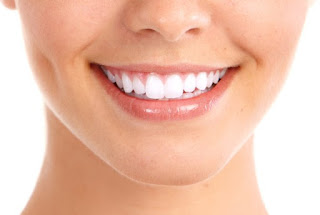
Teeth WhiteningWould you believe, teeth whitening actually improves your chances of getting ahead in life? Most people, who have not considered teeth whitening, understand how big of a difference it can make. However, there is now statistical evidence collected from a series of studies that show people with whiter, brighter smiles tend to do better both in social and in professional environments. For example, one study has shown that women tend to judge men by their teeth, with over 71% of them preferring a man with a bright and confident smile. The same pattern, of people with whiter teeth getting an edge, continues with jobs. We found that people seeking a dream job are 58% more likely to land it if they have great teeth. People who had whiter teeth were also favored when it comes to promotions and raises. The data shows that people who have had their teeth whitened were favored for promotions and raises by 53%. All of this proves what many of us have known for a long time -  a winning smile opens doors.

If teeth whitening can, in fact, open doors, then it becomes even more important that you find a way to maintain the whiteness of your teeth after having the procedure done. It typically does not matter if you have had an over the counter whitening done or have come in to have your teeth whitening done by a professional, after a period of time the teeth start to get stained again. Diet and oral hygiene habits play a pivotal role in changing your tooth coloring, so it is important to understand some of the basic fundamentals. There are a few simple do's and don'ts that you should follow, which will help to maintain the pearly whiteness of your teeth for a longer period of time, and makes sure that you are not missing any of the opportunities coming your way.

The worst thing you can do after a teeth whitening procedure is to consume products that work to reverse the process by re-staining your teeth. While many of us live healthier lifestyles, it is important to realize that even in natural food there are dyes and colors that can have an adverse effect on your teeth. One example we like to give people is the coloring found in berries, with blackberries being a particular culprit. These can stain your teeth just as easily as the chemical dyes found in slightly less healthy products and should be rinsed off immediately after consumption. The effects of coloring in food, on your teeth, can be mitigated to a large degree by being careful about rinsing your mouth after consuming these products. We advise everyone to rinse or brush after every meal in order to prevent this.

Other products that can have a staining effect, and may not be so healthy, are tea and coffee. Both of these are very frequently used in today's high-speed world, and both have naturally occurring coloring that can stain your teeth. If you do drink a lot of tea and coffee, you should definitely consider making rinsing and brushing, several times per day, part of your routine in order to prevent them from undoing all the good work done by your teeth whitening procedure.

  >  

Wednesday, March 4, 2015

How Dental Implants Can Help Your Jaw and Face

Dental Implants
Did you know that dental implants can have a profound impact on the quality and health of your jaw? For many years, dental implants have been used as a way to replace teeth that have been lost. As the most innovative and permanent way of resolving the issue of tooth loss, implants have a plethora of benefits associated with them. Not the least of these is the fact that they can help your jawbone sustain and even grow.
But why do people need to replace their lost teeth anyway? There are a number of reasons why people have chosen to replace their teeth. The first is appearance and how unsightly it is to have a gaping hole where there once was a tooth. The second is functionality. Teeth influence what can be eaten, by virtue of being a tool for biting and chewing. A loss of teeth can quickly change a persons' lifestyle. Additionally, teeth are used in enunciation, so the loss of a tooth can influence how we speak as well.
Dental implants are superior to alternative solutions.
Dentures are effective as a replacement for lost teeth but do not address all of the issues. Dentures do not provide any support or stimulation to the jawbone. They also need to be fitted in the mouth using a chemical denture adhesive. Finally, there is always the risk of showing up for a fancy dinner and realizing you left your dentures on the nightstand. With bridges, there are many of the same problems except we have to add the inconvenience and discomfort of clasps and hooks to the equation. Dental implants are surgically implanted and once the tooth or crown, is in place you never have to treat it any differently that you would a natural tooth.
What else do dental implants do?
Today's dental implants are manufactured out of titanium with the sole purpose of ensuring that they synthesize with the body perfectly. Titanium can bond with organic material perfectly through a process known as osseointegration. When used in an implant, this convinces the body that the tiny implant screw is actually the same as a natural tooth root and needs to be treated as such. The implant and the attached crown provide stimulus to the jawbone which is essential for its survival.
The jawbone serves one primary purpose, from the body's perspective, and that is to support and secure the teeth. The teeth act as stimulants, providing the jawbone with stimulation every time that you bite or chew. This stimulation is what the body uses to know that the jaw is doing its work. When you lose a tooth, however, the stimulation stops, and the body is convinced that the jawbone no longer has a mission. The body then responds by starting a process known as resorption, whereby it starts to leach minerals like calcium away from the jawbone which will start to deteriorate. A healthy jaw is essential for the facial structure of a human being, which is why we recommend titanium implants that act like teeth and cause the body to restore the jawbone to its original state.


  >  

Monday, February 16, 2015

Common Problems Treated in a Pediatric Dentistry Office

Pediatric Dentistry
As a provider of pediatric dentistry, we get to see all kind of dental challenges that children face. As teeth develop, so too do children develop habits that may be detrimental to their teeth and long-term oral health. Childhood is a time for experimenting with many new things, like new snacks and playing sports, some of which could end up damaging a child's teeth. As such we have the ability to work with your child from a young age to help reinforce some of the good behaviors you are teaching them, while also identifying possible problems early on and working proactively to fix them. Kids' dental care is much different from adult dental care since it involves a mouth that is growing, developing, and constantly changing. While more challenging, working with a child's teeth also gives us the opportunity to put them on a path to strong, healthy, and positive oral habits.
As a kids dental care provider, the most common problem we see are children that come in with cavities, or decay that is threatening to become a cavity. Given how much most children love to eat sweets, especially the sticky kind that does so much damage to the enamel, most kid's dental care providers anticipate that children will develop some cavities. The important thing for parents to note is that cavities and decay can be avoided with the right kind of supervision and by teaching your children good habits. Candy, while delicious, is no friend to the teeth and should be restricted as much as possible. Also getting your children into the habit, which may be enforced by you at first, of rinsing their mouth after meals and particularly after eating something high in sugar, can help reduce the occurrence of decay and cavities.
Some of the most common pediatric dental problems that we see on a regular basis are:
  • Tooth Decay: Caused by leftover deposits of food in the mouth, tooth decay is one of the easiest problems to curtail. Carbohydrate-rich foods like candy and cookies, which children are so fond of, form a buildup of plaque on the teeth. This plaque releases acid, which in turn attacks the child's enamel and ultimately results in tooth decay. In our pediatric dentistry office, we can give your kids a fluoride treatment to help protect their teeth from decay.
  • Sensitive Teeth: Just like adult providers, kids dental care providers find that children too can develop tooth sensitivity. Hot and cold food or drinks can cause a child to wince in pain if they have a sensitive tooth. Often time's sensitive teeth are caused by the wearing down of tooth enamel or the occurrence of microscopic cracks. 
  • Grinding: Also known as bruxism, teeth grinding is very common among children. This can be especially prevalent at night. Typically, children will outgrow this habit as they get older, but in order to protect the permanent teeth it may be necessary to prescribe a night guard for the child. Grinding can, and usually does, wear away the enamel on the teeth causing a lot of pain and may even lead to sensitivity in the teeth. 
In our pediatric dentistry office, we can help your child to feel comfortable and stay in excellent health through regular teeth cleanings and exams.


  >  

Monday, February 2, 2015

Can I Have a Teeth Whitening Treatment With Sensitive Teeth?

Teeth Whitening
In our dental office, we provide teeth whitening services, and it is normal for those with sensitive teeth to ask if the procedure is safe. The answer is – yes when performed in our dental office. It is always wise to remain under the care of a dentist, when performing any treatments on your teeth. Even natural home remedies can damage your enamel if you are not careful. For this reason, we recommend scheduling a consultation or dental exam to discuss the best way to get the smile you have always wanted.

There are several reasons why having your teeth professionally whitened is better than trying it at home.  To start, the whitening solution in store bought products is not as strong, and this often leads people to overuse them.  If, for example, you use whitening strips and don't think your teeth got white, you may be tempted to buy whitening trays from the store and use them right away.  This is unwise because overexposure to the solution can irritate your teeth and gums.  Instead, it is better to visit our dentist office because our whitening solution produces dramatic results the first time, so there is no need, or risk, of overusing them.
Additionally, if you purchase teeth whitening trays in the store, there is the risk that the solution will leak out.  They design the trays to fit a variety of people and a variety of teeth.  This means that they won't fit your teeth perfectly.  Naturally, this creates leakage problems but when you visit our office, a custom tray can be created using a mold of your mouth.  With a fit that is snug and tight, there is no risk for leakage when using the right amount of solution.  This is important because the gum tissue is sensitive, and when the whitening solution comes in contact with it, people experience immediate irritation that can sometimes last for a few days.

The American Dental Association further explored the issue of teeth whitening for those with sensitive teeth and released a paper with their findings.  Titled, “Tooth Whitening/Bleaching: Treatment Considerations for Dentists and Their Patients”, the recommend that patients use potassium nitrate as a way to mitigate any sensitivity concerns.  Several toothpaste brands have this ingredient in them and by switching your paste prior to whitening your teeth, you can reduce the chance of irritation.  Simultaneously, the ADA recommended that dentists place potassium nitrate into teeth whitening trays and apply it to the teeth for thirty minutes prior to starting the treatment.  These solutions are simple, yet effective and must be administered under the care of a dental professional.

Once your teeth have been whitened, you can help to keep them that way by watching what you eat and drink.  There are several types of foods that will lead to staining.  For example, drinking red wine and coffee may cause staining as will eating a lot of red pasta sauce.  You can decrease your risk of staining by rinsing your mouth immediately after or brushing your teeth right away.


  >  

Friday, January 30, 2015

How a Root Canal Dentist Performs the Procedure

Root Canal Dentist
As a root canal dentist, we can save your infected tooth.  The term root canal, contrary to popular belief, does not refer exclusively to the surgery that so many patients have come to associate with dentistry. The discomfort that an infected root can cause, and the frequency with which many dentists perform the procedure has made a root canal surgery the most commonly perform procedure in America. The root canal is actually the area that houses the root, on the inside of the tooth itself. The pulp and pulp canal is also found in the root canal, and is the soft tissue that surrounds the root. When either the root of the tooth or the dental pulp becomes infected due to a bacteria, decay or some kind of trauma, it can cause extreme discomfort for the patient. This requires the intervention of a dentist, who will then perform a surgery that has come to be known as a “root canal” surgery. 

A root canal is the process of removing the infected root, cleaning out all the pulp, and filling the cavity to make sure it cannot be re-infected. A root canal typically starts with an x-ray which will tell us what the shape of the tooth’s root is and will allow us to identify if there is an infection that needs to be treated. If we find that there is an infection, chances are that you will be put on a course of antibiotics to kill it before starting the process of the root canal, or in some cases you will start the antibiotics immediately afterwards. Before removing the infected area, we will give you a local anesthesia so that you are as comfortable as possible and feel as little as possible. Our goal is to ensure your comfort and this is the best way to do so.

As a root canal dentist, we will place a rubber dam around the tooth to keep it free of saliva and completely dry. A dam is basically a rubber sheet that is placed over the tooth. Next, a small access hole will be drilled into the tooth, giving us access to the root and the pulp. We will then use dental files, in increasing diameter, to work down the hole and scrape away any infected pulp left along the sides. Simultaneously we will flush away debris with water or sodium hypochlorite. After the tooth is cleaned to our satisfaction, we will seal it and prepare it for any additional restorations that may be required. Sometimes, depending on the state of the root canal, we may place medication inside of the canal and wait for a couple of days before sealing up the tooth. 

Finally, a sealer paste and a rubber compound, called Gutta Percha is placed into the cavity. The exterior hole, which was made to give the dentist access to the root canal, is filled with a regular filling. Often, as a root canal dentist, we will give you an additional course of antibiotics to make sure that no other infections affect the tooth while it is healing. 

Tuesday, January 6, 2015

What to Expect When Calling an Emergency Dentist

Emergency Dentist
Visiting an emergency dentist is not the same as going in for a regularly scheduled tooth cleaning. It is often something nobody considers, much less plans for, until they are in a situation where they need our services. On the other hand, we deal with dental emergency situations on a daily basis and have come up with a series of protocols, that are designed to streamline the process, so that you can get the care that you need. Our process begins the minute a phone rings, and someone expresses that they may have an emergency. Our goal, during this initial conversation, is to determine what the incident is, diagnose its causes, and give you advice on how best to proceed. You can expect to spend several minutes on the phone which is not to cause you additional distress or discomfort but is to speed up the diagnosis so that we are ready for you when you come in. 

Your emergency care does not begin when you walk into the clinic, it typically begins when you call us which is why it is important for us to get information. We understand that when people call with an emergency they are typically in a lot of pain, caused by a tooth that has been knocked out or is in dire need of a procedure. This is why you will be asked a series of very pointed questions, from which we can get our initial analysis and give you primary directions. If at all possible, we ask that you have someone with you who can take notes and can potentially drive you to the office if we determine that you need to come in and see us immediately. 

Perhaps the most common reason why people call an emergency dentist is because they have been involved in some kind of accident. With the proliferation of sports, unsafe actions by children and numerous spontaneous mishaps occurring daily, it is not surprising that the highest number of calls we get are from people who have experienced  trauma. Our first question is always to determine the scope of the accident and to help you decide if you need to go into an emergency room or come straight to our emergency dentist office. The size, scope, and impact of an accident are all things that need to factor into this decision. 

We also want to know if you are bleeding.  This question is critically important because, in the event of a tooth loss, you may be bleeding to some degree. If the bleeding is heavy, we will recommend that you go to an ER unless you can make it to us in a very short amount of time.  For medium bleeding and light bleeding, we will give you tips on how to slow down or stop the bleeding by using sterile gauze. We will also want to know if the tooth is still attached. If the tooth has been knocked out, we will advise you on how to proceed to protect the tooth itself, if at all possible, so that we can attempt to restore it.

Tuesday, December 30, 2014

Things to Consider Before Visiting Our Cosmetic Dentistry Office

Cosmetic Dentistry
When visiting our cosmetic dentistry office, it is a good idea first to think about what you like and don’t like about your smile along with considering what goals you have for transforming it.  The better you can communicate, the more likely you will be to get the results that you are looking for.  It is important to have set ideas so that the recommendations you receive can be customized to your specific tastes and objectives.

You can always book your appointment in combination with a cleaning and dental examination.  That way your teeth can stay clean and healthy while you are simultaneously looking to improve them. Before speaking with the dentist, ask yourself these questions:

What is your availability?  It is important to understand how much time you have available to commit to dental work. This includes both in-office treatment time and recovery time.  For example, if you plan on getting married in three months you will want to have all of your dental work completed well in advance.  On the other hand if you recently retired you may have more time available to work on your dream smile.  In our cosmetic dentistry office, we want to know what your availability is so that those facts can be incorporated into your treatment plan.

How white do you want to go?  Decide ahead of time how white and bright you want your smile to be.  If you are having a teeth whitening procedure or getting dental veneers, the technician will need to know this so that your teeth don’t end up too white for comfort.

What are your major concerns?  Make a list of your major concerns or the things that absolutely must be corrected as part of the process.  Next, categorize the things you would like to have done but are not “must haves”.

How straight do you want your teeth?  Consider whether or not you are alright with a few teeth out of place or if you want them to be perfectly straight. While straight teeth are stunning, some people don’t mind slight imperfections, and this will influence your treatment options.

Do you like your gums?  When you smile, do your gums show enough or do they show too much?  If they are too large, some of the tissue may need to be removed through surgery, where if they have receded due to gum disease, they can be grafted so that the tissue can grow back.

Do you like the size and shape of your teeth?  If your teeth are too small or too large, this can be corrected using cosmetic dentistry procedures.

As a cosmetic dentist, we have many options for improving the appearance of your smile.  We can craft a stunning Hollywood-style smile or make minor adjustments so that you can still look and feel like your natural self.
Regardless of how much or how little work you want to be done, we can make your smile truly beautiful.  Come into our office with an idea of what you want so that we can make it into a reality.